AEO and GEO for Affiliates: Ranking in AI Search
Key Takeaways
- •Affiliate content is disproportionately exposed to AI answers because the queries are answerable and the click is the entire business model
- •Specific, verifiable claims get cited; general ones do not, and specificity is the single largest lever available
- •Content that is clearly the origin of a fact gets cited over content that repeats it
- •Check that you are not blocking AI crawlers through a CDN or security product default, which silently removes you from citation
- •The strategic response is producing less content with more in it, not a new set of tactics
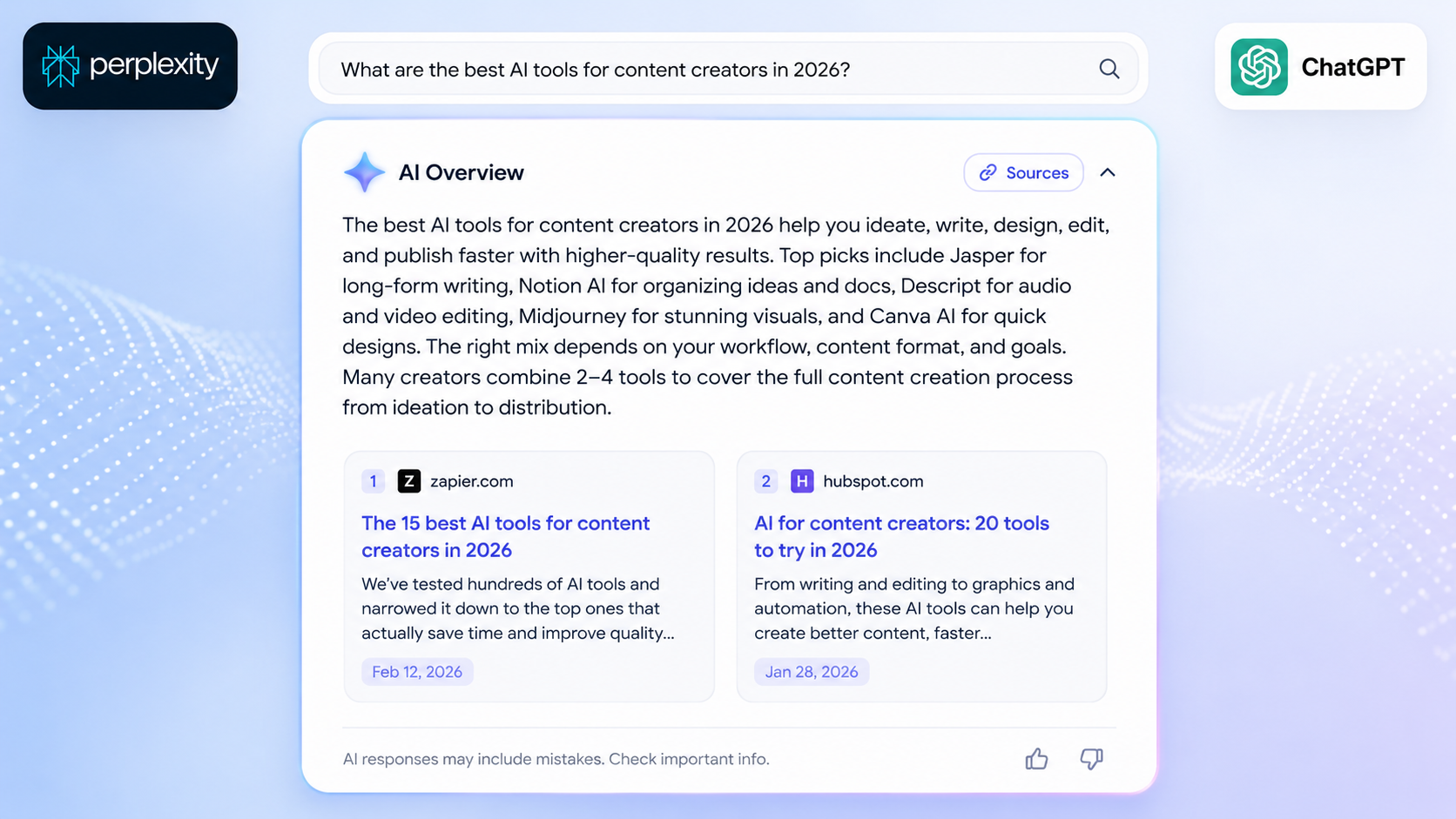
A growing share of the questions that used to produce a search result now produce an answer. Someone asks an AI assistant which affiliate platform to use, or which running shoe suits their gait, and gets a synthesised response with a handful of citations rather than ten blue links. If your content is not in that synthesis, the click never happens.
The industry has produced two acronyms for optimising toward this: answer engine optimisation and generative engine optimisation. The acronyms matter less than the underlying shift, which is real and has direct consequences for affiliate businesses specifically.
Why this hits affiliate content harder than most
Affiliate content is disproportionately exposed for three reasons.
The queries are answerable. "Best X for Y" is exactly the kind of question a language model can synthesise from multiple sources. Informational and comparison queries, the backbone of affiliate content, are the most substitutable.
The click is the entire business model. A publisher funded by display ads loses some revenue when impressions fall. An affiliate publisher loses everything, because there is no commission without a click through to the merchant.
Aggregated content has nothing to contribute. A page assembled from other people's reviews adds no information a model does not already have from those reviews. It will not be cited, because there is nothing in it worth citing.
That third point is the important one, and it is also the opportunity.
What actually gets cited
Observed patterns across AI answer systems, which differ in detail but agree in direction:
- Specific, verifiable claims get cited more than general ones. A number, a measurement, a tested result, a dated observation.
- Content that is clearly the origin of a fact gets cited over content that repeats it. If three sites report the same figure and one of them ran the test, that one gets named.
- Structured, extractable information is easier to use. A clear comparison table, a definition stated plainly, a list with consistent structure.
- Recency matters more than in classic search for anything time-sensitive, and dated content is treated more sceptically.
- Consensus across sources shapes what gets stated as fact. Being the only source making a claim cuts both ways.
None of that is achievable by writing for a keyword. All of it is achievable by having something to say.
Practical changes worth making
Answer the question in the first paragraph
Not a preamble about the importance of the category. State the answer, then justify it. This serves human readers who bounce from throat-clearing, and it makes the extractable answer easy to locate.
Make claims specific and attributable
"Cookie windows vary by program" is not citable. "Amazon Associates uses a 24-hour cookie window, against an industry norm of 30 to 90 days" is. Specificity is the single largest lever.
Structure for extraction
- Clear headings that state what the section answers.
- Tables for anything comparative.
- Definitions stated in one self-contained sentence rather than spread across a paragraph.
- Lists where the items are genuinely parallel.
This is not about gaming a parser. Content structured this way is easier for people to use as well, which is why it works.
Publish something original
The durable position is being the source rather than a summary of sources. For an affiliate site that means:
- Testing products and publishing what you measured.
- Running a survey of your audience and publishing the results.
- Building a tool or a dataset.
- Documenting your own process with real numbers.
One genuinely original piece is worth more in this environment than fifty aggregated ones, and the ratio is moving further in that direction.
Keep content dated and current
Visible publication and update dates, and actual updates rather than a changed timestamp. Time-sensitive claims that have gone stale are actively harmful, because being wrong in a citable way is worse than not being cited.
Do not block the crawlers you want citations from
Worth checking explicitly. Site owners frequently block AI crawlers through a security product's default settings without realising it, and then wonder why they are never cited. The relevant crawlers are separate from the classic search crawlers and are controlled separately in robots.txt and in some CDN configurations.
There is a genuine tradeoff here. Blocking prevents your content being used for model training; it also removes you from the systems that would cite you. For a business that depends on being found, the argument for allowing citation-oriented crawlers is strong.
What this means for affiliate strategy
Informational content becomes weaker as a business. Content whose only job is to answer a question is the most substitutable and the least likely to earn a click.
Decision-stage content becomes relatively stronger. Someone who has decided to buy still needs to complete a transaction, and the assistant handing them a summary does not complete it for them. Comparison, alternatives and objection content sits closer to that moment.
Owned audience matters more than it already did. Email is unaffected by any of this. A newsletter subscriber is not routed through a synthesis layer.
Brand queries become disproportionately valuable. Someone searching for you by name is not substitutable. Building enough recognition that people look for your take specifically is the most durable position available.
Product-led affiliate income holds up better. Recurring commissions from a customer already acquired do not depend on winning the click again next month. The recurring revenue models piece covers why this matters more now.
What not to do
Do not write content designed to be quoted rather than read. The systems that surface content are getting better at distinguishing the two, and human readers were always able to tell.
Do not chase every acronym. The tactics that work here are largely the tactics that work in search: be specific, be original, be current, be structured. The delivery mechanism changed; what constitutes useful content did not.
Do not abandon classic SEO. Traditional search is still the majority of discovery, and the systems that generate AI answers draw heavily on the same signals. The overlap between ranking well and being cited is substantial.
The honest summary
If your affiliate content is a summary of what other people published, this shift will remove your traffic, and no optimisation will prevent that, because a summary of summaries has no reason to exist.
If your content contains something that came from you, testing, data, experience, a tool, this environment is closer to neutral and in some ways favourable, because the volume competitors who used to outrank you on quantity have nothing to contribute to a synthesis.
The strategic response is not a new acronym. It is producing less content with more in it. Our guides on SEO for affiliate marketing and faceless affiliate marketing both cover the differentiation problem from different angles, and both land in the same place.
Written by Jamal Brooks
Jamal is a product engineer at Affiliateo who writes about payments, integrations, and technical best practices.