How to Build a Creator Business from Scratch
Key Takeaways
- •Decide who you are useful to before making content, specifically enough that you could name three real people who fit
- •Sell manually to a handful of people before building anything, because it teaches you what belongs in the product
- •Every piece of content on a rented platform should offer a path to an owned one, starting on day one
- •Most creators only produce problem content, which builds an audience that likes them and does not buy
- •Charging too little at the start attracts the most demanding customers and makes raising prices harder later
A creator business and a creator are different things. A creator makes content and hopes attention converts into money. A creator business has a specific person it serves, something it sells them, and a repeatable way of reaching them. Most people spend their first two years on the first and wonder why the second never arrives.
This is the order that actually works, which is close to the reverse of the order most people try.
Start with the buyer, not the content
The instinct is to make content, gather an audience, and figure out monetisation later. It is the most common approach and it has a specific failure mode: you end up with an audience assembled around entertainment, which is very hard to sell anything to.
The alternative is to decide first who you are useful to, specifically enough that you could name three real people who fit. Not "entrepreneurs" but "people running a service business who are stuck at capacity and cannot raise prices". The narrowness feels limiting and it is the entire advantage: you can be the obvious answer for a small group long before you can be one option among many for a large one.
Test it before committing. Talk to five people who fit the description. If you cannot find five, the category is too narrow or does not exist. If they all describe a different problem, you have not found the audience yet.
Sell something before you have an audience
The strongest sequence is uncomfortable: sell first, at small scale, before building anything.
Concretely, that means offering a service to the people you just spoke to. It is slow, unscalable, does not feel like a creator business, and it teaches you what people will actually pay for, which is information no amount of audience research produces.
Every scalable creator product worth building started as something someone did manually for a small number of people first. Skipping that step is why so many courses and products launch to silence.
Then build the content, aimed at the buyer
Content is the acquisition mechanism, not the product. Which means it should be aimed at the person you identified, about the problem you just got paid to solve.
Three formats do most of the work:
- Problem content, describing a situation precisely enough that the right reader feels recognised. This is what makes people follow.
- Method content, showing how you approach the problem. This is what makes people trust.
- Decision content, helping people choose between options. This is what makes people buy.
Most creators produce only the first, which builds an audience that likes them and does not buy.
Own the channel from day one
Every platform rents you attention on terms it can change. An email list, a community you control, or a customer list is the only thing that survives that.
The concrete practice: every piece of content on a rented platform should offer a path to an owned one. Not a hard pitch, just something worth having in exchange for an address.
This is the single most consequential habit in a creator business and it costs nothing to start on day one. Starting it in year two means the first two years of audience are gone.
Productise the thing you did manually
Once you have delivered the same thing several times, the pattern is visible. That pattern is your product.
The progression that works:
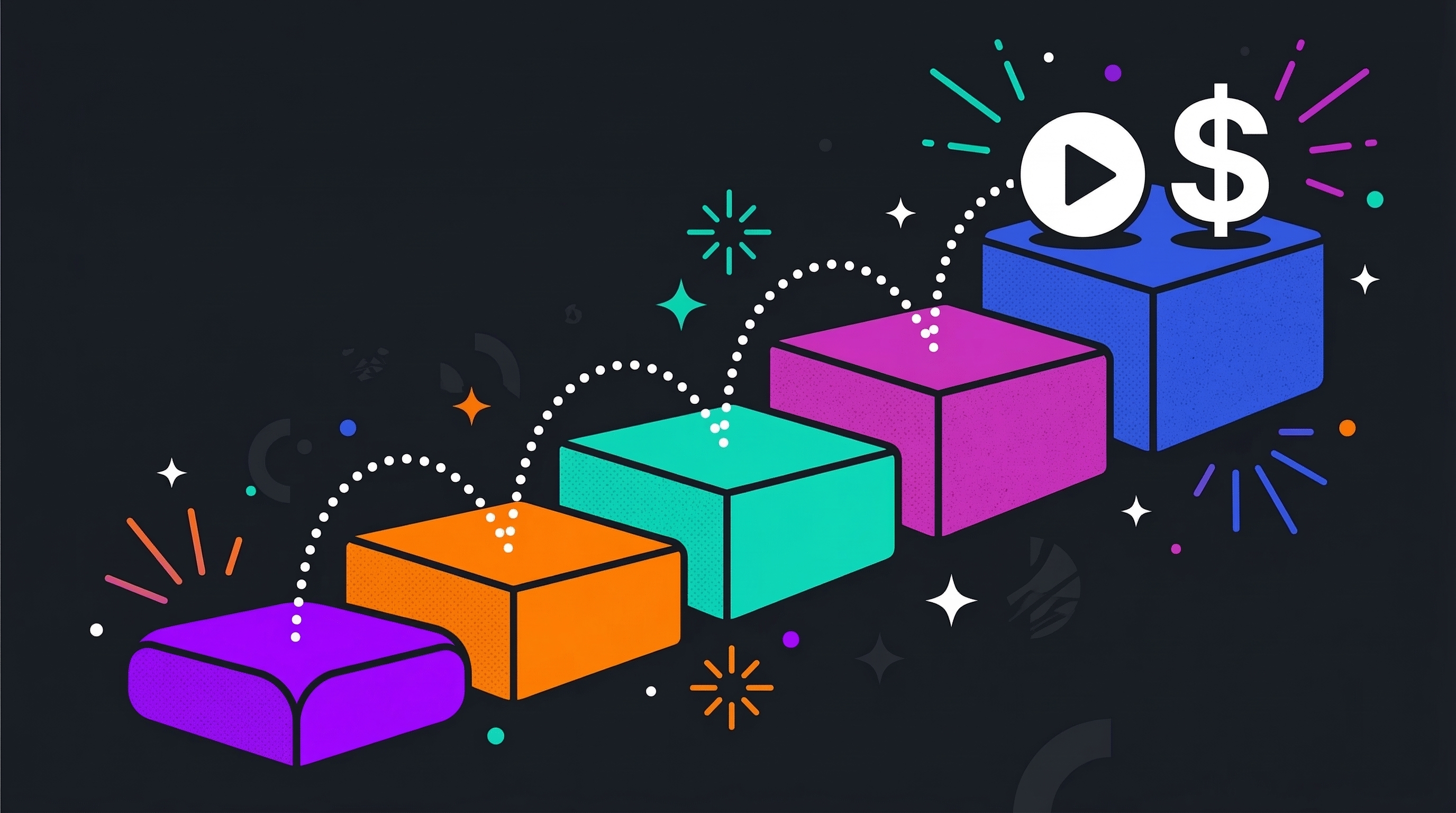
1. Do it manually for individual clients. High price, low volume, maximum learning.
2. Systematise it into a repeatable process. Same price, less time.
3. Deliver it in groups. Lower price per person, more people, better margin per hour.
4. Package it as a course, template, tool or membership. Lowest price, highest volume.
Each step trades revenue per customer for reach. Most people try to start at step four, which fails because they do not yet know what the product should contain.
Add recurring revenue as early as it makes sense
One-off sales restart from zero every month, and a launch-based business is exhausting to run.
The options that work for creators are memberships, subscriptions to something continuously updated, and retainers. What matters is that the value is genuinely ongoing, because a subscription whose value is all in the first month has a built-in churn cliff. The recurring revenue models piece covers the choice.
Then add leverage
Leverage means revenue that does not require your hours. Three forms:
- Affiliates and partners. Other people recommend what you sell and are paid only when it works. The cheapest acquisition available, because you pay after the sale rather than before it. See how to start an affiliate program.
- Contractors. Someone else delivers the parts that do not require you.
- Systems. Onboarding, support, fulfilment that runs without your attention.
This is the step that turns a creator business into something that could survive you taking a month off.
What the first year actually looks like
- Months one to three. Talking to people, selling a service manually, publishing consistently to almost nobody. This phase feels like failure and is not.
- Months four to eight. A small audience, repeat clients, the first visible pattern in what people ask for. Content starts producing occasional inbound interest.
- Months nine to twelve. A productised offering, a list worth emailing, and revenue that is not entirely proportional to hours worked.
The people who fail almost always fail in the first phase, because it does not look like progress and there is nothing to point to.
The five mistakes that cost the most
1. Building the audience before knowing who it is for. Produces followers who cannot be sold to.
2. Launching a product before doing the work manually. You do not know what belongs in it.
3. No owned channel. Every follower is rented and the rent can change.
4. Charging too little at the start. Low prices attract the most demanding customers, and raising prices later on existing customers is harder than starting higher with fewer.
5. Splitting attention across platforms. One channel done properly beats four done adequately, particularly in the first year when you have no distribution anywhere.
The honest part
A creator business is a business. It has customers, a product, acquisition and delivery, and it fails for the same reasons other businesses fail. The word "creator" describes the marketing channel, not a different set of rules.
The people who treat it as a business consistently outperform the people who treat it as making content and hoping. That is unglamorous and it is the most reliable observation in this whole area.
Written by Lena Whitfield
Lena is a growth strategist at Affiliateo. She specializes in community building and digital product launches.