How to Start a Business with No Money in 2026
Key Takeaways
- •No capital rules out inventory, premises and paid-acquisition models including most dropshipping, which trades stock cost for advertising cost
- •The models that work share one property: you get paid before or immediately after delivery, and delivery costs time rather than materials
- •Sell a service first to produce cash flow, because financial pressure is what kills every longer project
- •You do not need a logo, website or software subscriptions before customers: those are ways of feeling like a business instead of running one
- •A business built without capital has to be profitable early, which funded businesses can avoid discovering for years
Starting without capital is a real constraint and it rules out specific business models rather than ruling out business. What it actually means is that you cannot buy your way past any step, so every step has to be done with time instead.
That is workable. It also means picking a model where time genuinely substitutes for money, and several popular models do not qualify.
What no capital rules out
Be honest about this first, because attempting these without money is how people end up in debt rather than in business.
- Anything holding inventory. Retail, most ecommerce, reselling at scale. You need stock, and stock is money.
- Anything requiring premises or equipment.
- Anything with a long unpaid build phase where you cannot earn simultaneously.
- Anything requiring licensing, insurance or certification upfront in a regulated field.
- Paid-acquisition-dependent models, including most dropshipping. Dropshipping removes inventory cost and replaces it with advertising cost, which is still money.
What actually works
The models where time genuinely substitutes for capital share one property: you get paid before you deliver, or immediately after, and delivery costs you time rather than materials.
Service businesses
The most reliable no-capital start, in almost any skill: writing, design, development, bookkeeping, editing, translation, consulting, tutoring, cleaning, repairs, admin.
Why it works: clients pay for outcomes, you deliver with time, and you can charge deposits so you are never funding the work yourself.
Startup cost: effectively zero if you have a computer or the relevant tools.
Productised services
A service sold as a fixed package at a fixed price. Same zero startup cost, better economics, because efficiency gains accrue to you rather than to the client.
Digital products
Templates, guides, tools, courses. Free to produce with software you likely already have.
The honest constraint: distribution, not production. A product with no audience sells nothing, so this works best after a service business has given you both customers and credibility.
Affiliate and referral income
Recommending products and earning commission. No product, no inventory, no fulfilment.
The honest constraint: time. Six to eighteen months for search-led content, and only if the content is genuinely differentiated. Content assembled from other people's material will not rank at all.
Content businesses
Newsletter, channel, podcast. Free to start, slow to monetise, and the asset compounds.
Marketplace and platform work
Freelance platforms, gig work, teaching platforms. They take a percentage instead of a fee, which is exactly the trade you want with no capital: they carry the cost of acquisition and you pay only from revenue.
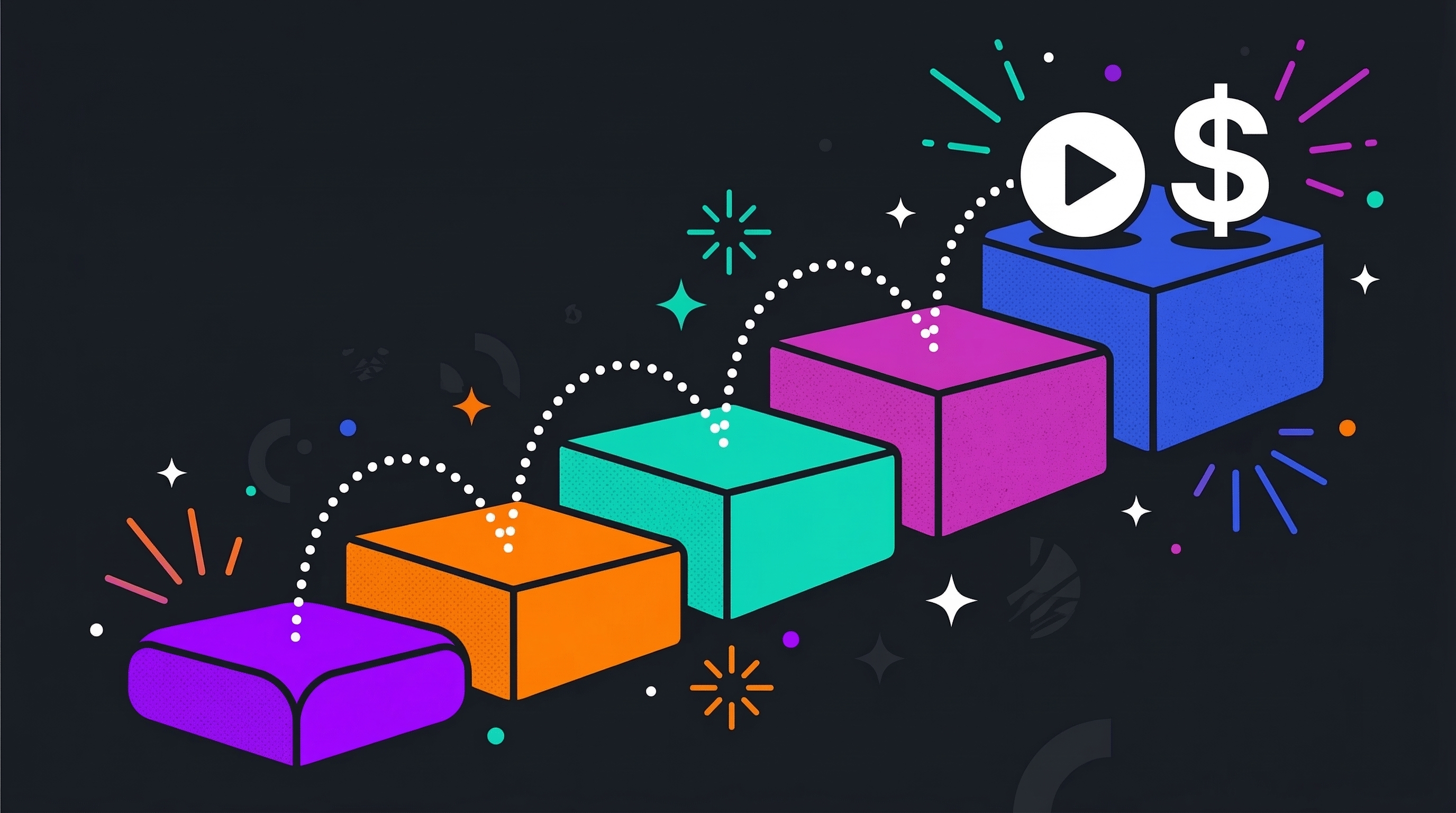
The sequence that works
1. Sell a service immediately. Whatever skill you have, sold to whoever needs it. This produces cash flow, which removes the financial pressure that kills every longer project.
2. Do the work manually and notice what repeats.
3. Raise prices as evidence accumulates. Nothing costs money and it is the fastest revenue increase available.
4. Productise the repeated thing into a package, then a product.
5. Build an owned audience alongside, from the first month. An email list costs nothing at small scale and it is the only asset that survives a platform change.
6. Add leverage once there is something to leverage: affiliates, contractors, systems.
The order is what matters. Most no-capital failures are attempts to start at step four, which requires an audience that step five was supposed to build.
Getting the first customers with no marketing budget
- People who already know you. Not a pitch, a specific message saying what you are doing and asking whether they know anyone who needs it. The most effective and least used channel.
- Communities where your customer already is. Participate genuinely for weeks before mentioning what you do. Selling immediately in a community gets you removed and deserves to.
- Direct outreach. Specific, researched, and about them. Low volume, high quality, and it works when generic outreach does not.
- Free work, strategically. One or two pieces for the right client, in exchange for a testimonial and permission to show the result. Genuinely effective at the start and a trap if it continues.
- Answering questions publicly. Wherever your customers ask them. Slow, compounding, and it builds the credibility that makes everything else easier.
Costs you cannot avoid entirely
"No money" usually means "almost no money". Budget for:
- Business registration, where required. Usually modest.
- A domain, which is cheap and worth having from the start.
- Payment processing fees, taken from revenue rather than paid upfront.
- Tax. Set money aside from the first payment. Nobody is withholding it and this is where new businesses most commonly get into trouble.
- Insurance, if you do client work where liability is a real risk.
Everything else can wait. Specifically, you do not need a logo, a website, business cards, or software subscriptions before you have customers. Those are all ways of feeling like a business instead of running one.
The genuine disadvantages
Being honest about these matters, because pretending they do not exist leads to bad decisions:
- Growth is slower, because you cannot buy customers or capacity.
- You are the constraint, so illness or exhaustion stops revenue entirely.
- Opportunities get missed because you cannot afford to take them.
- The pressure to take bad clients is real, and bad clients cost more than they pay.
The countervailing advantage is that a business built without capital has to be profitable from early on, because there is nothing else keeping it alive. Businesses that start with funding can go years without discovering whether the model works.
What to do this week
1. Name the skill you can sell right now, however unimpressive it feels.
2. Name ten people or businesses who might need it.
3. Contact five of them, specifically, about them rather than about you.
4. Set a price higher than feels comfortable.
5. Open a separate bank account before the first payment arrives.
That is the whole starting procedure. Everything more elaborate is a way of delaying step three.
Written by Lena Whitfield
Lena is a growth strategist at Affiliateo. She specializes in community building and digital product launches.