How to Flip Watches for Profit: A Complete Guide for 2026
Key Takeaways
- •Spend a year in the entry tier before touching high value, because the knowledge comes from handling watches rather than reading
- •Over-polishing rounds the case edges and destroys value, and many sellers polish before selling without knowing this
- •High-end counterfeits use genuine parts and correct movements, so visual inspection alone is insufficient
- •If you cannot verify confidently, do not buy: there is no version of this where hoping works out
- •Servicing costs and months of capital tied up are the two costs most often left out of the margin calculation
Watch flipping has the highest value per item of any accessible reselling category and the most expensive failure mode, because counterfeits at the upper end are extremely sophisticated and a single mistake can exceed a year of profit.
That risk is also the barrier that keeps the category profitable. Most people will not do the work required to buy confidently, which is why the margins survive.
The three tiers, which behave differently
Entry, roughly under 500. Seiko, Citizen, Orient, Tissot, microbrands and vintage mid-range. Real demand, modest margins, low counterfeit risk on most models, and a manageable learning curve. This is where to start.
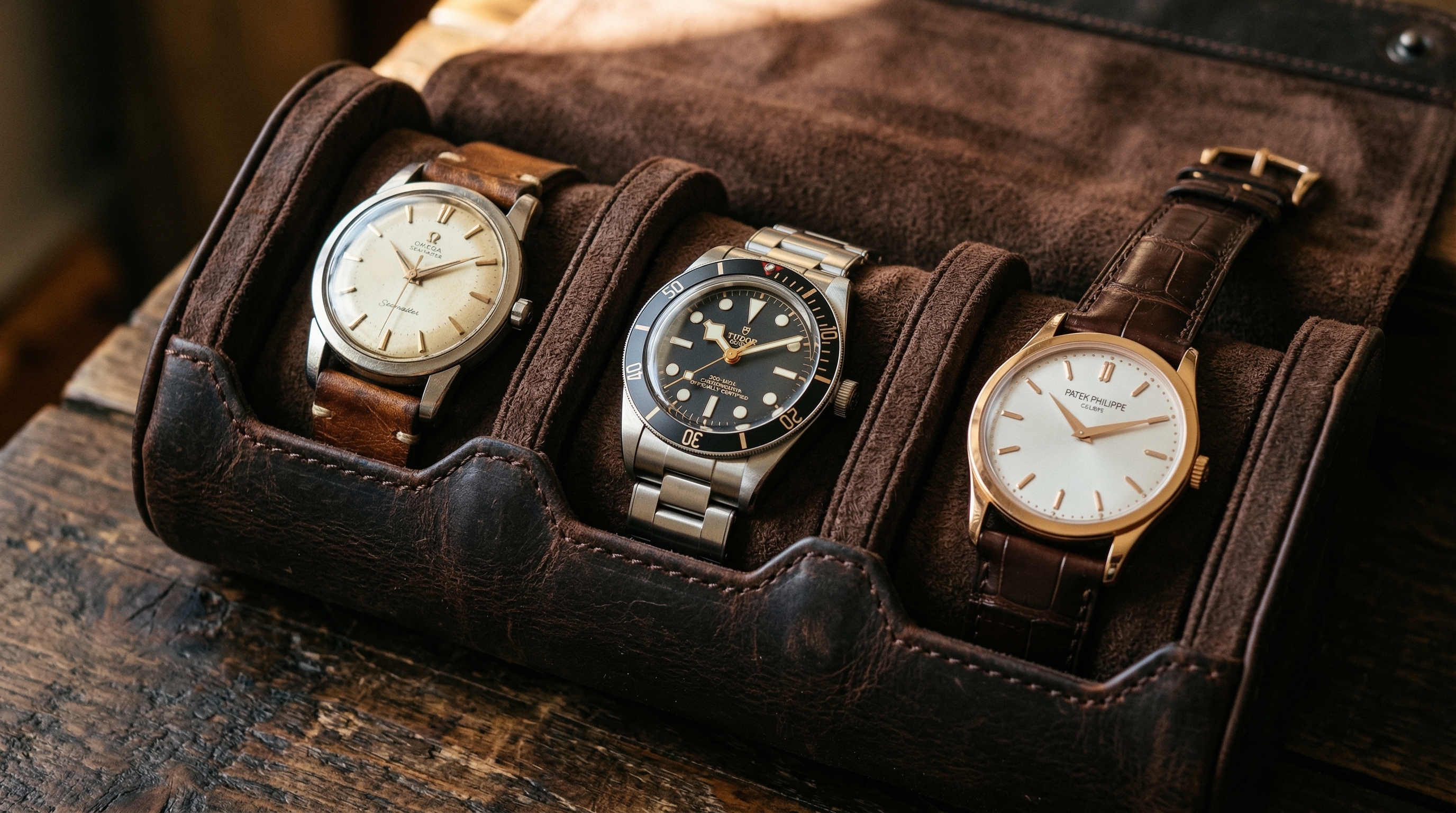
Mid, roughly 500 to 5000. Longines, Tudor, Oris, vintage Omega, and similar. Better margins, meaningful counterfeit risk, and servicing costs that materially affect value.
High, above 5000. Rolex, Omega at the upper end, Patek, Audemars Piguet and similar. Large absolute margins, sophisticated counterfeits including composite watches built from mixed genuine and fake parts, and capital requirements that make a single error severe.
Advice worth taking seriously: spend a year in the entry tier before touching the high one. The knowledge does not transfer from reading; it comes from handling watches.
What determines value
Reference number, which identifies the exact model and is the starting point for everything.
Condition, and specifically whether the case has been polished. Over-polishing rounds the sharp edges of the case and significantly reduces value on collectible pieces. Many sellers do not know this and will polish a watch before selling, destroying value in the process.
Originality. Original dial, hands, bezel and crown. Replaced parts, even genuine ones, reduce value on collectible watches substantially.
Box and papers. The original box and warranty card can add a meaningful percentage, particularly on modern luxury pieces.
Service history. Documented service adds confidence and value. An unserviced mechanical watch of unknown history is an unknown liability.
Movement condition, which requires either expertise or a watchmaker.
Authentication, which is the whole job
Counterfeits at the upper end are made with genuine parts, correct movements and accurate finishing. Visual inspection alone is insufficient above the entry tier.
What to check:
- Reference and serial numbers, cross-referenced against known production for that model and period.
- The movement, which requires opening the caseback. Correct calibre, correct finishing, correct engravings.
- Dial printing under magnification. Font, spacing and alignment are where many fakes fail.
- Lume, which should be consistent in colour and application.
- Weight and materials, which frequently differ.
- The bracelet and clasp, including engravings and end links.
- Case edges, for evidence of polishing.
When you cannot verify confidently: do not buy. There is no version of this where hoping works out.
Professional authentication is available and worth its cost above the entry tier. Factor it into your margin calculation rather than treating it as optional.
Where to source
Estate sales and auctions. Frequently the best prices, because sellers may not know what they have. Requires the fastest assessment.
Local listings. Underpriced watches appear regularly. Meet in a safe public place, and never for high-value transactions without appropriate precautions.
Collector forums and communities. Better prices than retail platforms and the sellers are knowledgeable, so mistakes go both ways. Reputation systems provide some protection.
Jewellers and pawn shops. Occasionally undervalue watches, since their expertise is often in metals and stones rather than horology.
Watch fairs and meets. Best for building relationships, which is where the sustainable sourcing comes from.
Trade-ins and upgrades. Collectors selling to fund a purchase are motivated and reasonable.
The costs people forget
- Servicing. A mechanical watch service costs a meaningful amount and can take months. An unserviced watch is discounted by buyers who know this.
- Authentication fees where used.
- Platform fees, which on high-value items are substantial in absolute terms.
- Insurance and secure shipping, which is not optional at these values.
- Capital tied up. Watches can take months to sell, and that capital is not working meanwhile.
Selling
Specialist platforms reach the right buyers and take a commission. Authentication services on some platforms provide buyer confidence that raises what you can charge.
Collector forums have the most knowledgeable buyers, lower fees, and higher expectations.
Auction houses suit rare and high-value pieces, with substantial commission on both sides.
Local sale avoids fees and shipping risk, and reaches far fewer buyers.
What raises the price you get:
- Photographs that show everything, including the caseback, movement where possible, clasp, and any flaw.
- A full and honest condition description. Disclosed issues are accepted; discovered ones become disputes.
- Box, papers and any service documentation included and photographed.
- Reference number in the title, because buyers search by it.
The legal and ethical position
Selling a counterfeit watch, even unknowingly, is a legal problem in most jurisdictions as well as an account and reputation problem.
The practical rules:
- Buy only what you can verify.
- Keep records of provenance for everything.
- If you discover something is not genuine, do not sell it, and take the loss.
- Never describe something as authentic when you are not certain.
A realistic path
1. Learn one brand thoroughly before buying anything. Reference numbers, production periods, common fakes, market prices.
2. Buy in the entry tier for a year. Cheap mistakes are how the knowledge forms.
3. Track every purchase and sale, including time to sell and total costs.
4. Build relationships with collectors, watchmakers and dealers. This is what makes sourcing sustainable.
5. Move up a tier only when you can authenticate confidently and absorb a mistake.
The ceiling
Watch flipping is capped by sourcing time and by capital, and profit per hour does not improve much with experience beyond a point.
Resellers who get past that build something on top of the knowledge: an audience, education, or recommendations. In watches specifically, expertise itself is valuable, because buyers need guidance in a category where mistakes are expensive.
For the general reselling fundamentals, reselling tips for beginners covers pricing and record keeping, and best items to flip covers how watches compare to other categories.
Written by Jamal Brooks
Jamal is a product engineer at Affiliateo who writes about payments, integrations, and technical best practices.