Upselling vs Cross-Selling: Strategies That Increase AOV
Key Takeaways
- •Upselling offers a better version of the same thing; cross-selling offers something different that goes with it
- •Raising average order value is the cheapest revenue available, because acquisition is already paid for
- •Post-purchase offers cannot damage the original conversion and are the most underused placement in most businesses
- •Watch conversion rate, not just order value, because aggressive offers can raise one while reducing the other net negative
- •The test is whether the offer would still be a good idea for the customer if you earned nothing from it
Upselling and cross-selling are frequently used interchangeably and they are different mechanisms with different psychology, different placement and different failure modes.
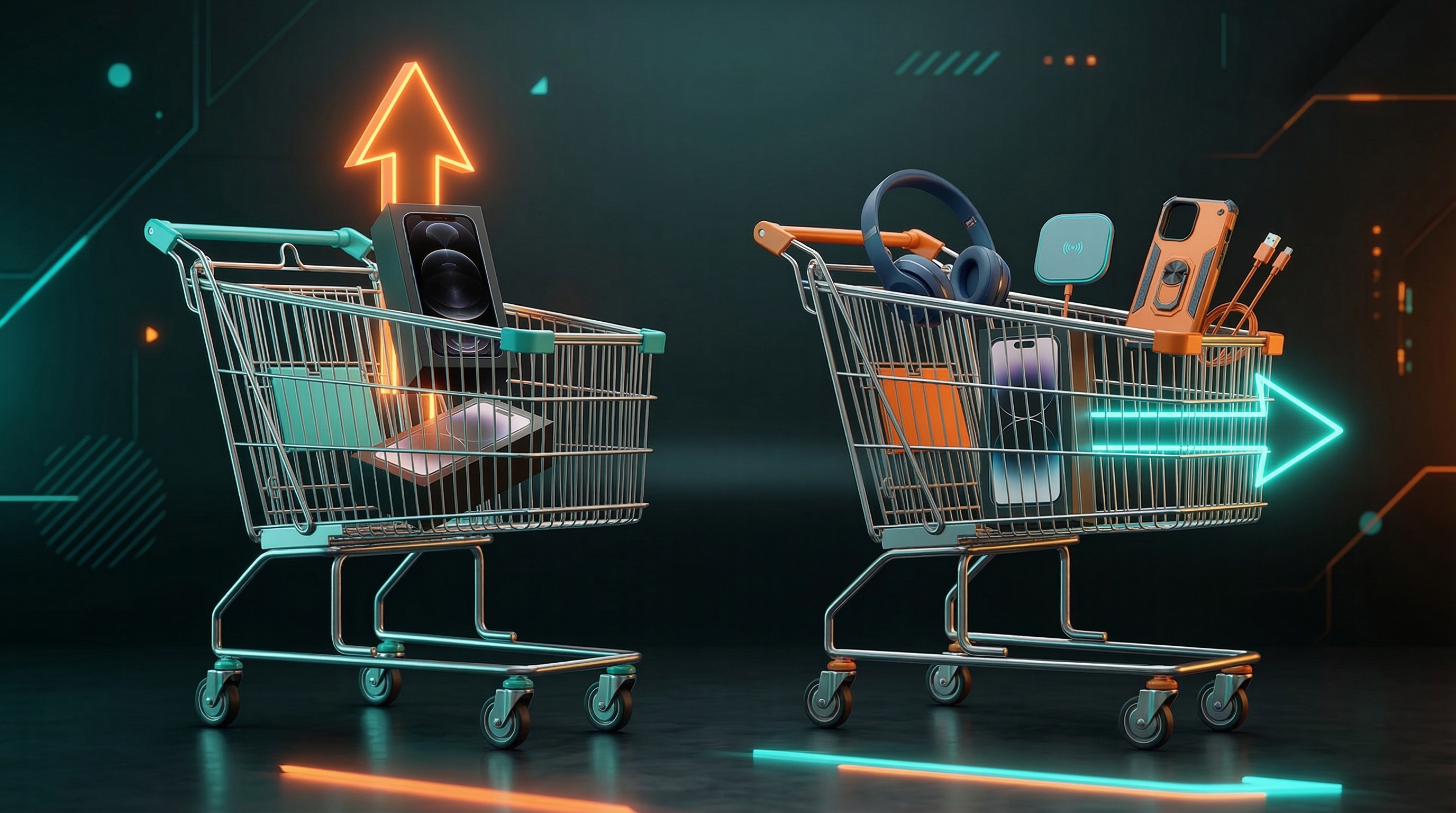
Upselling offers a better version of what the customer is already choosing. Bigger, longer, more capable, more premium.
Cross-selling offers something different that goes with it.
The distinction matters because they work at different moments and mixing them up produces offers that feel intrusive rather than helpful.
Why they matter more than acquisition
For most businesses, acquiring a customer costs more than the margin on their first purchase. Raising average order value is the cheapest revenue available, because you have already paid to get the person there.
A modest increase in average order value flows almost entirely to profit, since the acquisition cost is already spent and the fulfilment cost rises much less than the revenue does.
That is why this is worth getting right before spending more on traffic.
Upselling: how it actually works
The mechanism is that the customer has already decided to buy the category. You are helping them choose within it.
Where it works:
- At the point of choosing, before they commit. A comparison showing the difference between tiers.
- Immediately after adding to cart, framed as an upgrade rather than as a new decision.
What makes it work:
- A clear reason. Not "premium version" but the specific thing it does that the standard one does not.
- A visible price difference framed against the base, since a small increment on a decision already made is easier than a new expense.
- Genuine relevance. The upgrade should solve a problem the buyer actually has, not exist to be sold.
What fails:
- Upselling something the customer does not need, which erodes trust and raises returns.
- Too many tiers. Three is usually the ceiling before decision fatigue reduces conversion.
- Making the base option look deliberately crippled, which reads as manipulation.
Cross-selling: how it actually works
The mechanism is completion. The customer bought something and there is a genuinely related thing that makes it better or makes it work.
Where it works:
- In the cart, showing accessories and complements.
- On the product page, as "frequently bought together".
- Post-purchase, in the confirmation and in follow-up email. Underused, and it does not risk the original conversion at all.
What makes it work:
- Genuine relatedness. Batteries for the device, a case for the phone, refills for the machine.
- Lower price than the main item. A cross-sell at a similar price is a second decision and converts badly.
- Based on real data where you have it. What did other buyers of this actually buy alongside it?
What fails:
- Random related products with no real relationship.
- Cross-selling before the main purchase is complete, which introduces doubt at the worst moment.
- Too many options, which turns a small addition into a research task.
Placement, which decides most of the outcome
| Moment | Best mechanism | Risk |
|---|---|---|
| Product page | Upsell, tier comparison | Low |
| Add to cart | Upsell, upgrade offer | Low |
| Cart page | Cross-sell, complements | Low |
| Checkout | Cross-sell, small items only | Moderate, can cause abandonment |
| Post-purchase page | Either | None, purchase is complete |
| Follow-up email | Cross-sell, replenishment | None |
The two rows worth noticing are the last two. Post-purchase offers cannot damage the original conversion because it has already happened, and they are the most underused placement in most businesses.
The bundle, which is both
A bundle is an upsell and a cross-sell combined, priced as a single decision.
It works because it removes the individual decisions and frames the saving clearly. It fails when the bundle obviously contains things the customer does not want, which makes the whole thing feel like padding.
The rule: every item in a bundle should be something a meaningful share of buyers would have chosen anyway.
Subscription and replenishment
For consumable products, the strongest upsell available is converting a one-off purchase into a recurring one.
Offer it at the point of purchase with a clear benefit: a discount, guaranteed availability, or simply not having to think about it. This converts a single transaction into recurring revenue, which is worth several times the original sale. The recurring revenue models piece covers why.
Measuring it properly
- Average order value, before and after, which is the headline.
- Conversion rate, which must not fall. An upsell that raises order value while reducing the number of orders can be net negative.
- Return rate on upsold items, which is where poorly targeted upsells show up.
- Attachment rate on cross-sells, telling you which pairings are real.
The second is the one to watch most carefully. Aggressive offers frequently raise order value and reduce conversion, and the aggregate effect can be negative while the headline metric looks good.
The line between helpful and pushy
The test is whether the offer would still be a good idea for the customer if you earned nothing from it.
A phone case offered with a phone is helpful. A random unrelated product inserted at checkout is not. Customers can tell the difference immediately, and the second costs more in trust than it earns in revenue.
Practical constraints that keep it on the right side:
- One upsell and one cross-sell per journey, not several.
- Never interrupt the checkout flow with a full-screen offer.
- Make declining easy and obvious.
- Do not repeat an offer someone has already declined.
Where to start
1. Post-purchase cross-sell, because it is risk free and most businesses do not do it.
2. Replenishment or subscription offer on consumables.
3. Cart page complements, based on what buyers actually purchase together.
4. Tier comparison on the product page, if you have tiers.
5. Only then consider anything at checkout, carefully, watching conversion rate.
For the surrounding email mechanics, how to start a newsletter for your ecommerce store covers the post-purchase flow where much of this belongs.
Written by Lena Whitfield
Lena is a growth strategist at Affiliateo. She specializes in community building and digital product launches.